Monday, June 1, 2015

Capitol Newsletter


Under The Dome: Legislative Update


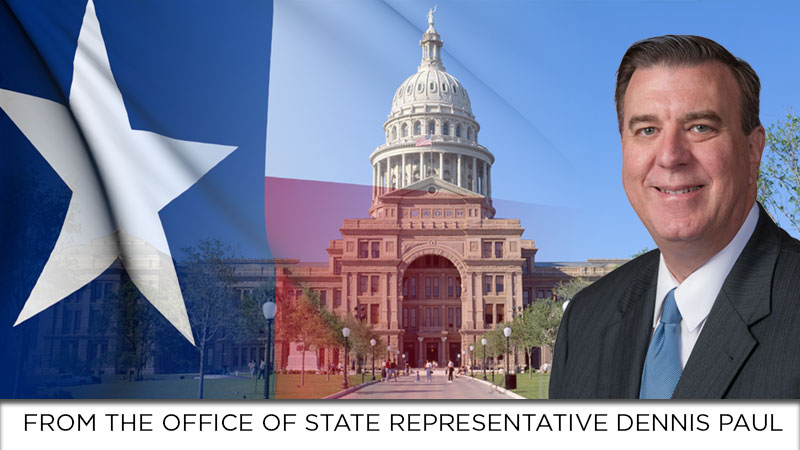
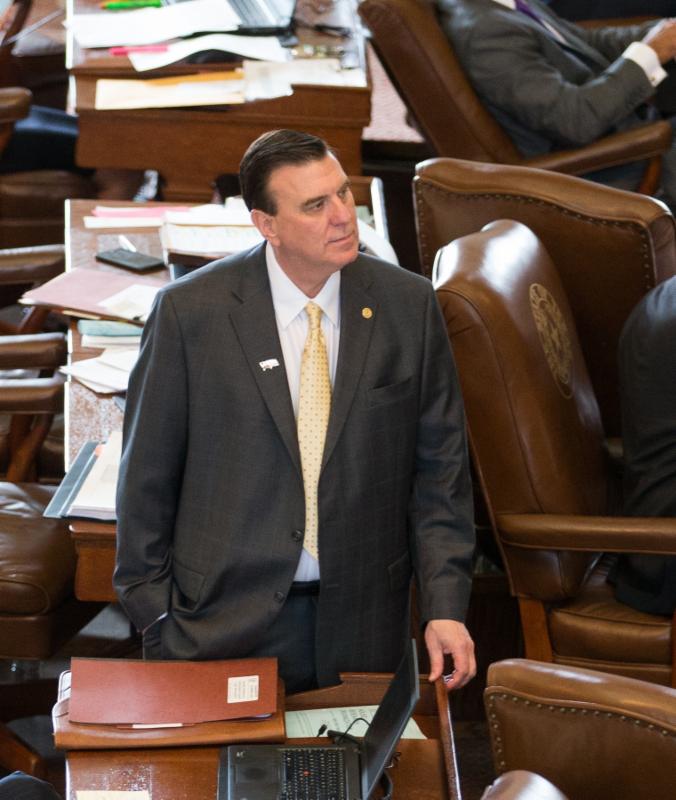
The 84th Legislative Session was an incredible experience for me that I will never forget.  As a freshman legislator, you never truly know what to expect in Austin.  I am honored to represent House District 129 and look forward to traveling the district this summer to share my experience with constituents and learn more about what we can do to make Texas better.  Below is a list of legislation passed by my office to benefit Texas and the constituents of House District 129.


Concern over the ability of public retirement systems to meet their long-term obligations has grown in recent years. House Bill 3310 aims at putting best practices first and assist public retirement systems with meeting their pension obligations by increasing transparency and providing a way for the system and its sponsoring entity to work together to ensure continued actuarial soundness.


House Bill 3456 amends current law relating to the composition of a district executive committee of a political party. It requires the state chair to call a meeting of the district executive committee of a political party to convene either as a whole in one location or separately in each county in the district at any time after the precinct chairs take office to fill a vacancy in a nomination or to transact any other business by the committee.  Additionally, for the purposes of filling a vacancy in a nomination, requires the state chair to canvass the votes of the district executive committee when meeting separately in each county and to make the required certification of a replacement nominee for placement on the ballot. 


Currently, judges and clerks who work at the polls do not have their information protected. Several different organizations seek personal information of these poll workers through a Texas Public Information Act request and there is no protection for them. House Bill 2160 amends current law to protect the information of those election poll workers. 


The University of Houston - Clear Lake recently transitioned to a four-year university with the enrollment of over 500 freshmen and sophomores. As such, more students will be living on the university campus, creating additional demand for student services.  House Bill 2921 amends the Education Code to authorize the board of regents of the University of Houston System to charge each student enrolled at the University of Houston - Clear Lake a recreation and wellness facility fee to be used only for the purpose of financing, constructing, operating, maintaining, improving, and equipping a recreation and wellness facility and for operating recreation and wellness programs at the university.  The legislation prohibits the fee from being charged unless the charging of the fee is approved by a majority vote of the students enrolled at the university participating in a general student election held for that purpose. The bill caps the fee amount at $150 per student for each regular semester, $75 per student for each summer session of eight weeks or longer, and $50 per student for each term of the summer session of less than eight weeks.


House Bill 1585; the Nassau Bay Hotel Occupancy Tax legislation will amend Chapter 351 of the Tax Code, regarding municipal hotel occupancy taxes. The bill adds in the tax code the allocation of revenue in certain municipalities, that would apply only to a municipality with a population of not more than 5,000 and located less than one-eighth of one mile from a space center operated by an agency of the federal government.  An applicable municipality would be authorized to use 3 percent of the 7 percent municipal hotel tax to 1) establish, acquire, purchase, construct, improve, maintain, or operate an authorized facility; and 2) pay bonds issued to establish, acquire, purchase, construct, improve, maintain, or operate an authorized facility. The total amount of municipal hotel tax used on an authorized facility could not exceed the amount of revenue from hotel tax attributable to events at the facility over the 15-year period after the completion of construction, and the legislation provides procedures to determine if that requirement was met. 


The Ellington Field Joint Resolution (Senate Concurrent Resolution 37) stated that the 84th Legislature of the State of Texas hereby respectfully urge the United States Congress to direct the Department of Defense to relocate the United States Africa Command to Ellington Field Joint Reserve Base in Houston; and That the Texas secretary of state forward official copies of this resolution to the president of the United States, to the secretary of the Department of Defense, to the president of the Senate and the speaker of the House of Representatives of the United States Congress, and to all the members of the Texas delegation to Congress with the request that this resolution be entered in the Congressional Record as a memorial to the Congress of the United States of America.


House Bill 1305 by Representative Greg Bonnen and I amends the education code to allow schools to participate in a locally administered program outside the federal structure without losing reimbursement for those campuses who remain with the School Breakfast Program or National School Lunch Program. The bill also provides state compensatory education funds to all economically disadvantaged students, regardless of their campus's participation in a federal meal reimbursement program.  The Conference Committee Report to H.B. 1305 includes language requiring Computer Education recipients in the Virtual School Network to report their use of those funds to the Texas Education Agency for approval, and requires that private meal operations charge at or below the federal rate for free and reduced meals. 


To read more about the legislation I filed and passed during the 84th Texas Legislative Session please visit the Texas Legislature Online


bills_coins.jpg
State Budget Sent To Governors Desk


On May 29th, the Texas Legislature gave overwhelming final approval to House Bill 1, a balanced and disciplined state budget for the next two years.


The $209 billion budget represents growth of 3.6 percent in All Funds, or less than 2 percent per year, and it stays beneath the spending limit in the Texas Constitution. While restraining overall spending, it prioritizes education, transportation and border security. It also reflects the House's considerable efforts to increase transparency and accountability in state spending.


House Bill 1 highlights the following priorities:


Education: The bill pays for an increase of roughly 80,000 students per year in the state's overall public school enrollment. On top of that investment, it provides an additional $1.5 billion for public education. The budget also provides more resources for higher education, including graduate medical education and TEXAS Grants, the state's signature financial aid program.


Transportation: Reversing a decades-old practice, the budget uses all of the money in the State Highway Fund for transportation instead of using some of those dollars for other programs. It also includes an infusion of oil-and-gas tax revenue made possible by voters' approval of a constitutional amendment in November 2014.


Transparency: In addition to using all of the State Highway Fund revenue for transportation, the budget takes a number of other steps to use taxes and fees for their intended purpose. Using more revenue as intended allows House Bill 1 to provide additional resources for hospital trauma care, state parks and other priorities.


Border Security: House Bill 1 provides $840 million in All Funds for border security. That investment, a significant increase over the current budget, will allow for the hiring of 250 new Department of Public Safety troopers and allow a 50-hour work week for all troopers. It will also fund the implementation of House Bill 11, which will bring consistency to the state's border security strategy.


Long-Term Obligations: The budget provides funding to address a shortfall in retired teachers' health care and to address the solvency of the state employee pension system.


Mental Health: The budget increases funding for behavioral health and substance abuse services by $151 million, providing additional resources for both inpatient and outpatient services.


To read more about the Texas State Budget please visit the Legislative Budget Board.  Source: http://www.house.state.tx.us/news/press-releases/?id=5573


TWIA REFORM LEGISLATION


On May 28th, Senator Larry Taylor and Representative Greg Bonnen spearheaded the passage of Senate Bill 900, the Texas Windstorm Insurance Association reform legislation. I was honored to lend my support in an effort to improve windstorm insurance for coastal residents and businesses. 

Senate Bill 900 improves the Association's funding structure by carefully balancing coastal policyholder and insurance company participation. The bill requires the Association to meet a 1 in 100 year probable maximum loss to ensure claims are paid in the aftermath of a major catastrophe. Senate Bill 900 also amends the Association's board of directors to ensure all stakeholders have equal representation. The bill keeps a 9-member board but goes from a 5-4 industry/coastal representation, and instead goes to a 3-3-3 industry/coastal/ inland representation composition. Finally, Senate Bill 900 gives the Texas Department of Insurance Commissioner the authority to privatize the Association's management if the Commissioner determines it is in the best interest of policyholders and the public.  To see the full legislative packet, please visit the Texas Legislature Online.


Budgeting Reforms in House Bill 7

I was glad to lend my support to House Bill 7 by Representative Drew Darby of San Angelo.  The Largest Single Tax Repeal of the 84th Legislative Session - HB 7 ends the "Professionals Tax" a $200 annual fee on accountants, architects, attorneys, chiropractors, dentists, engineers, interior designers, investment advisors, landscape architects, land surveyors, optometrists, physicians, property tax consultants, psychologists, real estate brokers, and veterinarians saving over 600,000 Texas professionals $125,000,000 annually.
 
School Finance Reforms - HB 7 implements fractional funding for 400 school districts in the state that were adversely impacted by the 2006 school finance reforms bringing an additional $100,000,000 a year to these school districts.
 
Assists Veteran Communities - HB 7 would provide assistance payments to counties and cities that are disproportionately affected by a loss of tax revenue from total residence homestead property tax exemptions for 100 percent or totally disabled veterans.
 
Improves Trauma Funding - HB 7 maximizes limited dollars to get them out quicker to the state's trauma facilities by utilizing balances and current revenues to fund an additional $93,100,000 more for trauma facilities.
 
Abolishes the Texas Emerging Technology Fund - HB 7 provides comprehensive, common-sense reforms for Texas' economic development incentive programs while balancing the state's need to compete for economic growth with a commitment to transparency and accountability. Eliminating the Emerging Technology Fund would ensure that Texas is not in the business of picking winners and losers.
 
Cuts Taxes on Construction Diesel Equipment - HB 7 reduces the diesel equipment sale and rental surcharge by 25% saving all Texans $20,000,000 annually on public and private construction jobs.
 
 Cuts Fees on Gas Stations - HB 7 reduces the fees gas stations pay to fill up their underground tanks by $10,000,000 annually ultimately saving taxpayers when they fill up.
 
Completes the Creation of the License Plate Trust Fund Account - Last session, the Legislature made significant strides to ensure the money raised by over 70 specialty license plates went directly for their intended purpose and did not sit in the treasury. HB 7 corrects this for eight specialty license plates inadvertently left out of that reform including Special Olympics, the YMCA and area blood banks.
 
Reduces Penalties for Drivers Complying with the Driver Responsibility Program - HB 7 cuts in half penalties for drivers convicted of operating a vehicle without a license or without liability insurance if they get into compliance within 60 days and/or prepay for a six month liability insurance policy. 
Reduces Fees on Medical Students - Repeals the tuition set-aside for the physician education loan repayment program saving students about $880,000 over this next biennium.

To see a more in depth review of House Bill 7, please visit the Texas Legislature Online.
SECOND AMENDMENT LEGISLATION

House Republicans also achieved two long-sought Second Amendment priorities this session with the passage of House Bill 910, which allows for the licensed open carry of handguns, and Senate Bill 11, which will expand the rights of Concealed Handgun License holders to possess their guns on college campuses. In addition, House Republicans provided the leadership needed to pass Senate Bill 2065, which protects pastors from lawsuits or criminal prosecution if they refuse to perform marriages that violate their sincerely held religious beliefs. House Republicans also passed a number of bills providing needed services to Texas veterans.


Capitol Visitor Information
 
My staff and I welcome everyone to visit our office as well as the historic Capitol building.  If you are planning a trip to the Capitol be sure to stop by our office, Room E2.814.  Here are some helpful tips for your visit:

State Representative Dennis Paul    
 
Texas State Capitol
P.O. Box 2910
Office: E2.814
Austin, TX 78768
512-463-0734 Office
512-463-0401 Fax
District129.Paul@house.state.tx.us

District Office

17225 El Camino Real, Suite 415

Houston, TX  77058

281-488-8900 Office

512-463-0401 Fax


Forward this email


This email was sent to info6426.densrec@blogger.com by dennis.paul@house.state.tx.us |  


Pol. Adv. paid for by Dennis Paul for State Representative | 626 1/2 Barringer Ln. | Suite A | Webster | TX | 77598

No comments: